Tag: bitcoin

  • How to Sell Bitcoin in Nigeria: Selling BTC Instantly

    How to Sell Bitcoin in Nigeria: Selling BTC Instantly

    Selling Bitcoin in Nigeria isn’t really the problem anymore. Most people already know how to sell BTC, the real struggle is selling it fast, safely, and without unnecessary back-and-forth.

    Between P2P delays, endless buyer excuses, frozen chats, and the familiar “network issues” story, what should be a simple transaction often turns into a waiting game. At this point, many Nigerians aren’t looking for fancy trading strategies; they just want to send their Bitcoin, receive naira, and move on with their day.

    If that sounds like you, you’re exactly where you need to be.

    If you want to sell Bitcoin in Nigeria without negotiating with strangers, without waiting on buyer confirmation, and without guessing rates, then using a direct crypto off-ramp like Swapto(Formerly Dtunes) is currently the cleanest option.

    This guide breaks down how to sell Bitcoin in Nigeria instantly, what actually works in today’s market, and why Swapto(Formerly Dtunes) has quietly become the most reliable option right now especially for anyone who wants to avoid P2P stress altogether.

    Key Takeaways

    • Bitcoin selling in Nigeria doesn’t have to be complicated.
    • The rate you see and where you sell makes a bigger difference than most people realise.
    • There’s a simpler way to convert BTC to naira without P2P stress.

    What Is Bitcoin, and Why Is It Popular in Nigeria?

    Bitcoin (BTC) is the OG cryptocurrency, a digital form of money that operates on a technology called blockchain. Unlike traditional money, Bitcoin isn’t controlled by any bank or government. Instead, it’s decentralized, secure, and can be sent anywhere in the world instantly.

    In Nigeria, Bitcoin’s popularity has skyrocketed. Many Nigerians use BTC to protect their savings against inflation, send money internationally, or invest in something new. Because of its growing use, there’s a big demand for platforms that let you buy and sell Bitcoin easily.

    Why sell Bitcoin and Cryptocurrencies in Nigeria?

    Trading lets you buy and sell BTC, USDT, and other coins to make a profit. Many Nigerians use crypto trading to hedge against inflation or as an investment. The Nigerian crypto market is vibrant, with many platforms and apps available on Google Play and the Apple Store to start your trading experience anywhere, anytime.

    Is It Legal to Sell Bitcoin in Nigeria?

    Selling Bitcoin in Nigeria is legal. The Nigerian government recognizes cryptocurrencies as digital assets and regulates them under theInvestments and Securities Act (ISA) 2025. The Nigerian Securities and Exchange Commission (SEC) oversees crypto trading, which means buying and selling BTC is allowed—as long as you use licensed crypto platforms.

    Banks now support crypto transactions, so you can sell Bitcoin and get your money sent directly to your bank account safely. That said, always keep an eye on regulations because this space moves fast.

    Why Nigerians Are Selling Bitcoin More Than Ever

    Bitcoin has long moved past the hype stage in Nigeria. Today, it’s not just a buzzword or a “get-rich-quick” idea, it’s a real financial tool that people use to manage money, protect savings, and move value around the country or even internationally.

    Nigerians sell BTC for a variety of practical reasons like locking in profit when prices spike, converting crypto to naira for everyday spending, hedging against inflation, funding businesses or personal projects and moving value faster than traditional banking allows.

    When it’s time to convert your Bitcoin to naira, the platform you pick matters far more than the coin itself. One wrong choice can mean delays, lost funds, or a frustrating back-and-forth with buyers, which is exactly why Swapto(Formerly Dtunes) has become the go-to solution for Nigerians who value speed, security, and simplicity.

    Here are things to consider before converting bitcoin to naira in Nigeria

    Two Ways to Sell Bitcoin in Nigeria

    1. Peer-to-Peer (P2P) Platforms

    Peer-to-Peer platforms let you sell Bitcoin to another person, rather than a company or service. On paper, it seems straightforward, but in practice, it can be time-consuming and stressful. Here’s what usually happens:

    • Waiting for a buyer: You might post your BTC for sale and then sit around, hoping someone is ready to buy at your rate. Sometimes it takes hours or even days.
    • Negotiating rates: Buyers often want to haggle, which means you have to keep adjusting prices or explaining why your rate is fair.
    • Confirming payments manually: Once a buyer claims to have paid, you need to check your bank account or payment method before releasing BTC, which is tedious and prone to errors.
    • Dealing with delays, disputes, or silence: It’s not uncommon for buyers to disappear, make excuses, or dispute payments, leaving you stuck in a frustrating back-and-forth.

    While P2P works, it requires a lot of effort and patience, which is why many Nigerians are looking for faster, safer alternatives.

    2. Direct Crypto Off-Ramps

    Direct crypto off-ramps, like Swapto(Formerly Dtunes) allow you to sell Bitcoin directly to the platform instead of another person. This removes almost all the headaches of P2P trading. Here’s how it works:

    • No waiting for buyers: You don’t depend on anyone else being online or ready to buy. The platform is always ready to receive your BTC.
    • No negotiations or haggling: The rate is displayed clearly upfront, so there’s no need to argue or compromise.
    • Instant crediting to your wallet: You send BTC, the naira equivalent is immediately credited to your Swapto(Formerly Dtunes) wallet and you can withdraw straight to your bank account.
    • Simplicity and peace of mind: No chats, no disputes, no “network issues” excuses. Just fast, secure, and predictable transactions.

    This is why more and more Nigerians are moving away from P2P and choosing platforms like Swapto(Formerly Dtunes).

    What Makes a Good Crypto Platform for Nigerians?

    • Security: Look for 2FA (two-factor authentication) and SSL encryption.
    • User-Friendly Interface: A simple app or website makes trading easy, especially for beginners.
    • Instant Payment: Getting your naira quickly is important.
    • Customer Support: Responsive service can save you headaches if anything goes wrong.
    • Regulated: Choose platforms licensed by the Nigerian SEC or reputable international exchanges.

    Best Platforms to Sell Bitcoin in Nigeria

    PlatformSelling MethodPayout SpeedP2P StressRate TransparencyNigerian Focus
    Swapto(Formerly Dtunes)Direct off-rampMinutes after confirmationNoneLive rate shown upfrontBuilt for Nigerians
    Binance P2PPeer-to-peerDepends on buyerHighVaries by traderGlobal
    PaxfulPeer-to-peerDepends on buyerHighNegotiatedGlobal
    Yellow CardDirectModerateNoneFixedAfrica-wide
    BushaDirectModerateNoneFixedNigeria

    Swapto(Formerly Dtunes) Outshines Other Platforms Naturally

    What sets Swapto(Formerly Dtunes) apart for many Nigerian Bitcoin sellers is how predictable the entire selling process feels. Instead of waiting on a buyer, monitoring chats, or confirming bank alerts manually, the platform allows you to sell Bitcoin directly and move on. Once your BTC receives the required network confirmations, your naira balance is credited and ready for withdrawal. In a market where timing affects value, that reliability makes a real difference.

    Transparency also plays a big role. Swapto(Formerly Dtunes) shows you the BTC-to-naira rate before you commit to a trade, and that rate is exactly what gets applied. There are no hidden deductions, sudden adjustments, or last-minute surprises. Combined with strong security measures like two-factor authentication, transaction monitoring, and controlled withdrawals, the platform removes many of the risks that often come with peer-to-peer trading.

    Beyond the technical side, Swapto(Formerly Dtunes) is clearly designed for Nigerian users. The app is easy to navigate whether you’re selling Bitcoin for the first time or doing it regularly. Local bank withdrawals work smoothly, customer support understands the realities of Nigerian banking, and the instant-sell model eliminates the emotional and time cost of P2P transactions. Taken together, Swapto(Formerly Dtunes) fits how most Nigerians actually want to sell Bitcoin today: fast, clear, and without unnecessary stress.

    How to Sell Bitcoin in Nigeria

    Swapto(Formerly Dtunes) homepage

    This is what the process actually looks like in real life.

    • Download the Swapto(Formerly Dtunes) app from Google Play Store or the App Store and create your account using your email. The setup is quick and doesn’t feel like paperwork.
    • Add your Nigerian bank details and set a secure PIN. This PIN authorises withdrawals and keeps your account locked down.
    • From the dashboard, tap “Trade Crypto” and select Bitcoin (BTC) as the asset you want to sell.
    • Enter the amount of BTC you’re converting. The app shows you the naira value immediately.
    • Copy the BTC wallet address provided and send your Bitcoin from your external wallet.
    • Once the blockchain confirms the transaction, your naira is credited to your Swapto(Formerly Dtunes) wallet.
    • Withdraw straight to your bank account and that’s all.

    How Long Does It Take to Sell BTC on Swapto(Formerly Dtunes)?

    Most of the waiting time has nothing to do with Swapto(Formerly Dtunes), it’s about Bitcoin network confirmation.

    Once your BTC is confirmed on the blockchain, conversion happens next and quickly, your naira value reflects shortly after and instant withdrawal to your bank follows.

    Delays usually happen only when the wrong wallet address is used, network fees are too low or the sender rushes the process.

    Tips for Selling Bitcoin at the Best Rate in Nigeria

    • Compare Rates Across Platforms
      Check exchange rates on different platforms before selling. Even a small difference can mean more naira in your pocket. Swapto(Formerly Dtunes) has the best rates, so no need to stress.
    • Sell in Small Batches
      If the Bitcoin price is volatile, selling smaller amounts over time can help you get better average rates.
    • Watch Out for Fees
      Every platform charges fees. Swapto(Formerly Dtunes) offers low fees, so you keep more of your money.

    Common Questions About Selling Bitcoin in Nigeria

    Q: Can I sell Bitcoin instantly?
    A: Yes, many platforms pay instantly or within minutes once the transaction is confirmed.

    Q: How do I convert Bitcoin to cash?
    A: Sell your BTC on a crypto platform and withdraw the Naira directly to your bank. Then, withdraw cash from your bank as usual.

    Q: Are there limits on how much BTC I can sell?
    A: Limits vary by platform and your verification level. Higher verification usually means higher limits.

    Q: What fees should I expect?
    A: Expect platform fees (usually 0.5% to 1.5%) and network transaction fees for moving BTC on the blockchain.

    Q: How safe is peer-to-peer trading?
    A: P2P is safe if you use escrow and trade on reputable platforms. Always verify the buyer’s reputation.

    Final Thoughts

    Selling Bitcoin in Nigeria doesn’t have to be complicated. With the right crypto platform, a secure Bitcoin wallet, and a bit of market knowledge, you can sell BTC for Naira at the best rate and get paid instantly.

    Stay updated on Nigeria’s crypto regulations and always prioritize security. Whether you’re selling your first Bitcoin or managing a portfolio, this guide should help you make confident, smart decisions.

    Quick Recap Table: How to Sell Bitcoin in Nigeria

    StepWhat to DoTip
    Create WalletChoose app wallet like Trust WalletKeep your private keys safe
    Pick PlatformSelect trusted platform (Yellow Card, Busha)Compare exchange rates first
    Verify AccountComplete KYC by uploading IDUse official documents
    Transfer BTC to PlatformSend BTC from your walletDouble-check the wallet address
    Sell BitcoinPlace sell order for BTCCheck fees and best rate
    Get Paid in NairaWithdraw to your Nigerian bank accountUse instant withdrawal if possible

  • How To Verify Bitcoin On Cash App

    How To Verify Bitcoin On Cash App

    If you’re reading this, you’ve probably tried to verify Bitcoin on Cash App while trying to buy or withdraw Bitcoin on Cash App and run into that familiar message:

    “Verification required to access Bitcoin features.”

    Frustrating, right?

    Maybe you were trying to send BTC to a cold wallet, or you just wanted to take advantage of a quick dip in price. You might have even watched the price spike and realized you couldn’t sell because verification was still pending.

    You’re not alone at all.

    At Swapto(Formerly Dtunes), we’re in the trenches with people who use crypto in real life. Not for hype, but for remittances, savings, flipping opportunities, or simply staying ahead in a fast-moving financial space. And if you’re in Nigeria, Ghana, Kenya, or anywhere else with growing Bitcoin adoption, the stakes are even higher when platforms make things unnecessarily complicated.

    So in this guide, I’ll walk you through how to verify Bitcoin on Cash App—not just the steps, but what to expect, how to fix common issues, and how to position yourself for a smooth experience. Consider this your go-to playbook with extra insights you won’t find on generic sites.

    How to Verify Bitcoin on Cash App (Simple Steps):

    • Download and install Cash App from Google Play or Apple Store
    • Sign up with your name, phone number, and email
    • (Optional) Link your bank account for easier transactions
    • Tap the “Investing” tab, then select “Bitcoin”
    • Tap “Verify” to start the verification process
    • Enter your full name, date of birth, and SSN
    • Upload a clear photo of your valid ID (e.g. driver’s license or passport)
    • Take a selfie for identity confirmation
    • Wait for approval (usually within minutes)
    • Once approved, you can buy, sell, or withdraw Bitcoin
    • (Optional) Turn on two-factor authentication for added security
    Verify Bitcoin On Cash App

    Why Verify Bitcoin On Cash App

    Cash App doesn’t hate you. They’re just doing what most regulated platforms must do—follow rules tied to anti-money laundering (AML) and know-your-customer (KYC) policies.

    When you verify your identity, you unlock access to all Bitcoin-related features: sending, receiving, buying, selling, and transferring BTC outside Cash App. Until then, you’re stuck at the gate with a locked wallet.

    It’s also a move to protect you. Verifying gives your account a higher trust rating, reduces fraud risks, and puts you in the good books of financial regulators.

    Common Reasons People Delay or Avoid Bitcoin Verification

    Before we get into the steps, let’s call out a few common roadblocks:

    • Fear of surveillance: Some users worry about sharing personal info like a driver’s license or passport.
    • Bad past experiences: Maybe another app took days—or weeks—to approve you.
    • Not sure what’s needed: A lot of folks don’t know that blurry selfies or expired IDs cause rejections.

    Whatever your reason, this article will help you verify confidently, avoid mistakes, and get your Bitcoin flowing.

    Quick Checklist to Verify Bitcoin On Cash App

    To verify Bitcoin on Cash App, here’s what you’ll need:

    • A clear selfie for ID confirmation
    • A Cash App account with a working phone number and email
    • A valid ID (like a driver’s license or passport)
    • You must be 18 or older

    Pro Tip: Don’t use scanned copies. Use the original ID and your smartphone camera for best results.

    Bitcoin on cashapp

    How to Verify Bitcoin on Cash App

    Let’s break it down in real terms—not tech jargon.

    Step 1: Update or Download Cash App

    Make sure you’re using the latest version of Cash App. Update it from your app store or download it if you’re new. Old versions may not support Bitcoin verification properly.

    Step 2: Create or Log In to Your Account

    Sign up with your email and phone number. You’ll get verification codes for both—don’t skip them. Cash App won’t proceed without confirming your identity basics first.

    Step 3: Navigate to the Bitcoin Section

    • Tap the Investing icon at the bottom
    • Choose Bitcoin
    • Hit the “Enable Withdrawals and Deposits” prompt

    This is where the magic starts.

    Step 4: Start the Verification Process

    Cash App will now ask for:

    • Your full legal name
    • Date of birth
    • SSN (for Americans)
    • A government-issued ID photo
    • A live selfie

    Pro Tip: Take your selfie in the same lighting and outfit as your ID photo. Cash App uses automated facial recognition to match your selfie with your ID.

    How Long Does It Take to Verify Bitcoin on Cash App?

    Once you’ve submitted your ID and selfie, Cash App will start reviewing your information. For most users, verification is fairly quick — but a few things can affect the timing.

    What to Expect:

    • Most verifications are completed within 24 to 48 hours
    • Some users get verified in just a few hours if everything is clear
    • In some cases (like unclear photos or high traffic), it might take up to 72 hours

    What Can Delay the Process?

    • A blurry selfie or poorly taken ID photo
    • Mismatched details between your ID and what you entered
    • Verifying during busy periods like weekends or market surges
    • A manual review triggered by an issue in your submission

    Pro Tips to Get Verified Faster:

    • Take your photos in good natural lighting
    • Double-check that your info matches your ID exactly
    • Don’t use screenshots, edits, or cropped versions of your documents
    • Try submitting your verification during weekdays when volume is lower

    If your verification is still pending after 48 hours, you can contact Cash App support directly through the app for help.

    Can I Verify Bitcoin on Cash App Without an ID?

    Short answer? No, not if you want full access.

    Cash App requires a valid government-issued ID to unlock Bitcoin features like sending, withdrawing, or increasing your buy limits. This is part of their compliance with U.S. regulations around cryptocurrency—specifically anti-money laundering (AML) and know-your-customer (KYC) laws.

    Some people online might say you can bypass this by linking your debit card or bank account. That might get you into the app, but it won’t unlock Bitcoin features. You’ll still get hit with a message asking for ID when you try to send or withdraw BTC.

    What You Can Do Without ID

    • View Bitcoin prices
    • Possibly buy small amounts under very tight limits
    • Track BTC performance inside the app

    But you can’t:

    • Withdraw BTC to another wallet
    • Sell BTC
    • Send BTC to another user
    • Increase your Bitcoin limits

    What If You’re Not in the U.S.?

    Cash App’s Bitcoin features are officially supported in the U.S. only. So if you’re in Lagos or Nairobi and using a U.S. Cash App account via VPN or a U.S. number, proceed with caution. You must have valid U.S.-based identity documents for this to work.

    Using a friend’s details? Don’t. It might work temporarily, but it can get flagged and frozen later.

    How to Troubleshoot Common Problems

    1. Why is my cash app bitcoin verification taking so long?

    This usually means one of three things:

    • Your ID photo wasn’t clear enough
    • Your selfie didn’t match your ID
    • There’s a high volume of verifications

    Fix it: Re-upload clearer images and be patient. If you wait over 48 hours, contact Cash App support via the app or support.cash.app.

    2. “Verification Denied” Error

    This happens when:

    • Your info doesn’t match public records
    • You’re underage
    • You uploaded edited or filtered images

    Fix it: Re-enter correct info. Use a different government-issued ID if your first one was rejected.

    Pro Tips for Fast Approval

    1. Use natural daylight for selfies and ID photos
    2. Don’t crop or edit your ID images
    3. Use a U.S. number and SSN (if required)
    4. Ensure your address matches records if asked

    What Can You Do After Verification?

    Once verified, here’s what’s unlocked:

    FeatureAccess
    Buy Bitcoin✅
    Sell Bitcoin✅
    Send BTC to external wallet✅
    Receive BTC from another wallet✅
    Increase BTC purchase limit✅

    Limits vary but usually increase to $100,000+ weekly depending on usage and history.

    Final Thoughts

    Bitcoin is no longer fringe. It’s part of how people build wealth, store value, and make transactions across borders. If you’re serious about using Cash App for BTC—whether to invest, send money to family, or just stay liquid—you’ll need to verify your account.

    Do it now, do it right, and do it once. That way, the next time Bitcoin spikes and you’re ready to sell or withdraw, you’re not stuck waiting for an approval email.

    Frequently Asked Questions About Bitcoin Verification on Cash App

    What does Bitcoin verification mean on Cash App?


    It’s the process of confirming your identity so you can buy, sell, or send Bitcoin using the app.

    Can I sell Bitcoin without verifying my account?


    No, you’ll need to verify your identity first. This includes sharing your name, date of birth, and a valid ID.

    What happens after I’m verified?


    You’ll get access to higher Bitcoin limits, which can grow based on how you use your account.

    More articles you may like:

  • BTC/NGN: How much is $600 Bitcoin to Naira

    BTC/NGN: How much is $600 Bitcoin to Naira

    $600 Bitcoin to Naira: The world of cryptocurrencies has been marked by volatility, innovation, and a constant quest for value. Bitcoin, the pioneer of cryptocurrencies, has garnered significant attention and adoption globally.

    With Bitcoin continuing to gain traction in Nigeria, many people are asking:
    “How much is $600 worth of Bitcoin in Naira today?”

    Whether you’re looking to invest, trade, or cash out, knowing the real-time BTC to NGN value is essential. In this article, we’ll break down how much $600 in Bitcoin (BTC) is worth in Naira (NGN) based on current exchange rates — and show you how to calculate it yourself anytime.

    As its value fluctuates against various fiat currencies, it’s crucial to understand its worth in different contexts.

    BTC/NGN: How much is $600 Bitcoin to Naira?

    $600 bitcoin to naira is currently worth N928,400. You can use the Swapto(Formerly Dtunes) app to always check the updated rates of bitcoin to naira. The Swapto(Formerly Dtunes) app is available on the Play Store and App Store.

    Bitcoin, often abbreviated as BTC, operates in a decentralized manner, transcending geographical boundaries and traditional banking systems. This characteristic makes it appealing for individuals seeking financial autonomy and investment opportunities. Nigeria, a country with a growing interest in cryptocurrencies, particularly Bitcoin, has witnessed a surge in Bitcoin trading and adoption. Consequently, understanding the value of $600 Bitcoin in Naira becomes crucial for investors, traders, and enthusiasts alike.

    The exchange rate for Bitcoin to Nigerian Naira fluctuates due to market dynamics, demand-supply forces, regulatory changes, and global economic factors. It’s imperative for individuals intending to convert $600 worth of Bitcoin to Naira to consult reliable cryptocurrency exchanges or financial platforms for real-time rates. These platforms offer transparency and convenience, enabling users to make informed decisions regarding their investments and transactions.

    However, it’s crucial to note that the exchange rate may vary significantly depending on market conditions. Therefore, individuals should monitor the rate closely to optimize their conversions and mitigate potential losses or gains.

    However, there are platforms that allow you to check the real time rates of cryptocurrencies like Bitcoin.

    How to Check BTC/NGN Rate

    To check the BTC/NGN rate, you can visit the Swapto(Formerly Dtunes) website or app. They provide real-time rates for various cryptocurrencies, including Bitcoin.

    Here’s how to check BTC/NGN rate on the Swapto(Formerly Dtunes) app:

    • Log in to your account
    • Click “Rate Calculator” on the home page
    • Navigate to the crypto section
    • Select your coin (BTC in this case)
    • Enter amount in USD

    The current rate and total are shown and you can see what you’ll be getting in Naira.

    However, it is important to keep in mind that the exchange rate can fluctuate, and the actual value may vary.

    Factors Influencing the Value Several factors influence the value of Bitcoin against the Nigerian Naira, including:

    1. Global Market Trends: Bitcoin’s value often correlates with global market trends, investor sentiment, and macroeconomic indicators. Positive developments, such as institutional adoption or regulatory clarity, can drive up the price of Bitcoin, leading to an increase in its value against the Naira.
    2. Local Demand and Adoption: Nigeria has emerged as one of the leading markets for Bitcoin adoption in Africa. Factors such as increasing internet penetration, youth population, and a growing interest in alternative investments contribute to the demand for Bitcoin within the country. Higher demand typically leads to an appreciation in Bitcoin’s value against the Naira.
    3. Regulatory Environment: Regulatory changes and government policies can impact the value of Bitcoin in Nigeria. Positive regulations that support cryptocurrency adoption and innovation often result in a more favorable environment for Bitcoin investors, leading to an increase in its value. Conversely, regulatory uncertainty or restrictive measures may hinder Bitcoin’s growth and affect its valuation against the Naira.
    4. Technological Advancements: Technological advancements in blockchain technology, scalability solutions, and security protocols can influence Bitcoin’s utility and attractiveness as a store of value or medium of exchange. Improvements in the Bitcoin network’s infrastructure and ecosystem may enhance investor confidence and contribute to the appreciation of its value against the Naira.
    5. Economic Indicators: Economic indicators such as inflation rates, currency devaluation, and geopolitical tensions can impact the value of fiat currencies like the Nigerian Naira. Bitcoin, often touted as a hedge against inflation and economic instability, may experience increased demand during times of uncertainty, leading to a rise in its value relative to the Naira.

    Conclusion

    The valuation of $600 worth of Bitcoin to Nigerian Naira reflects the dynamic nature of cryptocurrencies and their interaction with local and global economic forces. As Bitcoin continues to gain traction as a viable asset class and means of exchange, understanding its value in different fiat currencies becomes paramount for investors and users. By considering factors such as exchange rates, market trends, regulatory developments, and technological advancements, individuals can navigate the cryptocurrency landscape effectively and make informed decisions regarding their financial assets.

    In summary, while the specific value of $600 Bitcoin to Naira may vary over time, staying informed and vigilant enables individuals to harness the potential of cryptocurrencies for financial empowerment and wealth creation in Nigeria and beyond.

  • BTC/NGN: How Much is $200 Bitcoin to Naira?

    BTC/NGN: How Much is $200 Bitcoin to Naira?

    $200 Bitcoin to Naira: If you’re looking for how much $200 Bitcoin to Naira is, then keep reading, because this post is for you.

    Currently, the price of $200 Bitcoin to Naira is between N300,000 to N400,000 based on the prevailing exchange rate. We will explain why in a couple of minutes, but first, let’s understand the role of Bitcoin in the cryptocurrency world.

    The world of cryptocurrency has experienced significant growth and recognition in recent years, with Bitcoin leading the pack as the pioneer and most widely recognized digital currency. As more people embrace the potential of Bitcoin, questions arise about its value in different fiat currencies. For those in Nigeria, understanding the conversion rate of Bitcoin to Naira is crucial. In this article, we delve into the specific question: “BTC/NGN: How much is $200 Bitcoin to Naira?”

    Understanding Bitcoin and Naira: Before we delve into the conversion rate, it’s essential to have a basic understanding of Bitcoin and Naira. Bitcoin, often abbreviated as BTC, is a decentralized digital currency that operates on a blockchain, ensuring secure and transparent transactions. On the other hand, the Naira is the official currency of Nigeria, and its value is subject to various economic factors such as inflation.

    BTC/NGN: Current Exchange Rate:

    As the cryptocurrency market is highly volatile, exchange rates can fluctuate rapidly. Therefore, it’s crucial to check real-time rates for accurate conversions. At the time of writing, the exchange rate for Bitcoin to Naira is influenced by market demand, global economic conditions, and local factors in Nigeria’s cryptocurrency ecosystem.

    $200 Bitcoin to Naira

    $200 worth of bitcoin is currently about N307,000 on bitcoin trading apps like Swapto(Formerly Dtunes). It is calculated by multiplying $200 by N1536.12 which is the current exchange rate on Swapto(Formerly Dtunes) app.

    Factors Affecting Bitcoin to Naira Exchange Rates:

    Several factors contribute to the fluctuation of Bitcoin to Naira exchange rates. Understanding these factors can provide insights into the dynamics of the cryptocurrency market and help predict potential changes in rates. Some key factors include:

    1. Market Demand and Supply: The basic economic principle of demand and supply plays a significant role in determining exchange rates. If the demand for Bitcoin increases relative to its supply, the value against the Naira may rise.
    2. Global Economic Conditions: Bitcoin is influenced by global economic trends, geopolitical events, and market sentiment. Economic instability or uncertainties can impact the cryptocurrency market, affecting exchange rates.
    3. Regulatory Environment: Government regulations and policies regarding cryptocurrency in Nigeria can have a direct impact on Bitcoin’s value against the Naira. Positive regulatory developments may lead to increased adoption and, consequently, a higher exchange rate.
    4. Technological Developments: Advancements in blockchain technology and improvements in the functionality of Bitcoin may influence its perceived value, affecting exchange rates.

    Conclusion: In conclusion, the question of “BTC/NGN: How much is $200 Bitcoin to Naira?” requires a dynamic understanding of the cryptocurrency market. As of the current landscape, it’s advised to use reliable exchange platforms to obtain real-time rates for accurate calculations. The value of Bitcoin to Naira is influenced by a myriad of factors, making it an exciting yet unpredictable market. As the cryptocurrency ecosystem continues to evolve, staying informed about market trends and factors affecting exchange rates is crucial for anyone involved in Bitcoin transactions in Nigeria.

  • Top 5 Free Bitcoin Transaction Accelerators to Use

    Top 5 Free Bitcoin Transaction Accelerators to Use

    Free Bitcoin Transaction Accelerators: In the ever-evolving landscape of cryptocurrency, Bitcoin transactions have become a vital part of the digital economy. However, the scalability of the Bitcoin network sometimes leads to congestion, resulting in delayed transactions. To expedite the confirmation process, users often turn to Bitcoin transaction accelerators. In this article, we will explore the top 5 free Bitcoin transaction accelerators that users can leverage to enhance the speed of their transactions.

    What is a Bitcoin Transaction Accelerator?

    Before diving into the top accelerators, let’s understand what a Bitcoin transaction accelerator is. A transaction accelerator is a service that expedites the confirmation of Bitcoin transactions by prioritizing them in the network’s queue. It works by resubmitting the transaction to the network, increasing the chances of miners including it in the next block.

    5 Free Bitcoin Transaction Accelerators to Use

    1. BTC.com Transaction Accelerator: Boosting Speed with Reliability

    BTC.com, one of the leading Bitcoin wallets and mining pools, offers a reliable and free transaction accelerator service. Users can simply visit the BTC.com website, enter their transaction ID and the provided security code, and click on the “Accelerate” button. The service boasts a high success rate, making it a popular choice for users seeking a quick and efficient acceleration of their Bitcoin transactions.

    2. ViaBTC Transaction Accelerator: Miners’ Choice for Speed

    ViaBTC, a prominent cryptocurrency mining pool, provides a free Bitcoin transaction accelerator service. Users can access this service on the ViaBTC website, where they need to submit their transaction ID and complete a captcha for verification. ViaBTC prioritizes transactions for its mining pool, increasing the likelihood of swift confirmation. This accelerator is known for its effectiveness, especially during periods of network congestion.

    3. ConfirmTX: Community-Powered Acceleration

    ConfirmTX stands out as a community-driven Bitcoin transaction accelerator. It operates on a simple principle – users can submit their transaction details on the ConfirmTX website, and the community helps accelerate the process by upvoting transactions. The more upvotes a transaction receives, the higher its priority for acceleration. ConfirmTX is an excellent option for those who appreciate a decentralized and community-driven approach to expediting Bitcoin transactions.

    4. Bitcoin Afterburner: Acceleration with a Personal Touch

    Bitcoin Afterburner is a user-friendly and free Bitcoin transaction accelerator that comes in the form of a software tool. Developed by the team at Samourai Wallet, Bitcoin Afterburner allows users to bump their transaction fees, increasing the likelihood of prompt confirmation. The tool can be downloaded and installed, providing users with a more hands-on approach to accelerating their Bitcoin transactions. Bitcoin Afterburner is particularly beneficial for users who prefer a personal touch in managing the acceleration process.

    5. Antpool Transaction Accelerator: Empowering Users with Speed

    Antpool, another major player in the cryptocurrency mining industry, offers a free Bitcoin transaction acceleration service. Users can access the Antpool Transaction Accelerator on their website and submit their transaction details, including the transaction ID and a captcha for verification. As part of the Antpool mining pool, this accelerator prioritizes submitted transactions, increasing the chances of rapid confirmation. Antpool Transaction Accelerator is a reliable option for users seeking a free and effective solution to accelerate their Bitcoin transactions in times of network congestion.

    Conclusion

    In the fast-paced world of cryptocurrencies, the need for efficient and prompt transactions is paramount. Bitcoin transaction accelerators play a crucial role in addressing the challenges posed by network congestion. The top 5 free accelerators mentioned – BTC.com, ViaBTC, ConfirmTX, and Bitcoin Afterburner – offer users diverse options, whether they prefer a miner-centric approach, community-driven solutions, or a more hands-on tool. By leveraging these accelerators, users can enhance the speed and efficiency of their Bitcoin transactions, ensuring a seamless experience in the digital economy.

  • Steps on How to Recover Stolen Bitcoin

    Steps on How to Recover Stolen Bitcoin

    How to Recover Stolen Bitcoin: Bitcoin has become a game-changer in how we handle money, offering a new level of freedom and privacy. It’s a digital asset that allows us to manage wealth without relying on traditional banks. But, just like with any valuable asset, Bitcoin comes with its own set of risks especially when it’s online. Unfortunately, theft is one of the harsh realities of the digital world.

    Maybe you’ve had your Bitcoin stolen through a scam, a hacked wallet, or an exchange breach. It’s a terrifying experience, but don’t panic, there are steps you can take to try and recover your stolen Bitcoin. In this guide, we’ll walk through how to handle such situations, what you can do to potentially get your funds back, and, most importantly, how to keep your Bitcoin safe moving forward. Let’s dive into protecting your digital wealth, step by step.

    How to Recover Stolen Bitcoin

    If you find yourself in the unfortunate situation of having your Bitcoin stolen, it’s crucial to act swiftly and follow specific steps to increase the chances of recovering your lost funds. In this comprehensive guide, we will explore the steps on how to retrieve stolen Bitcoin.

    Understanding the Nature of Bitcoin Theft

    Before diving into the steps to recover stolen Bitcoin, it’s essential to comprehend the different ways in which Bitcoin theft can occur. This understanding will help you better assess your situation and tailor your recovery efforts accordingly. Bitcoin theft can take various forms, including:

    1. Phishing Attacks: These are fraudulent attempts to obtain your private keys or login credentials through deceptive websites or communication methods that appear legitimate.
    2. Hacking of Exchanges: Some thieves target cryptocurrency exchanges, breaking into their systems to steal users’ funds. Notable examples include the Mt. Gox and Coincheck incidents.
    3. Malware and Keyloggers: Malicious software can infiltrate your device, recording your keystrokes or directly accessing your Bitcoin wallet’s private keys.
    4. Social Engineering: Scammers may manipulate individuals into revealing their private keys or sending Bitcoin to fraudulent addresses through elaborate schemes.
    5. Stolen Hardware Wallets: If you use a hardware wallet to store your Bitcoin, physical theft of the device could lead to the loss of your funds.
    6. Exit Scams: Some cryptocurrency projects and platforms engage in exit scams, where they vanish with users’ funds.
    7. Ponzi Schemes: Investors can fall victim to Bitcoin-related Ponzi schemes, resulting in substantial losses.

    Now that we have a grasp of the potential avenues through which Bitcoin theft can occur, let’s delve into the steps to retrieve stolen Bitcoin.

    Step 1: Confirm the Theft

    The first step in any recovery process is to confirm that your Bitcoin has indeed been stolen. Sometimes, what appears to be a theft may be a simple misunderstanding or technical glitch. Here’s how to verify the theft:

    1.1. Check Your Wallet Balance: Log in to your Bitcoin wallet or exchange account to confirm that your balance is lower than expected.

    1.2. Review Transaction History: Examine your transaction history for any unauthorized or suspicious transactions. Look for unfamiliar wallet addresses or outgoing transfers you did not initiate.

    1.3. Check for Security Breaches: Review your device for signs of malware or unauthorized access. Ensure your email and other accounts associated with your Bitcoin holdings are secure.

    1.4. Contact Your Exchange: If your Bitcoin was stored on a cryptocurrency exchange, contact their customer support to inquire about any suspicious activity on your account.

    Step 2: Report the Theft

    Once you have confirmed the theft, it’s crucial to report it to the relevant authorities and organizations. Reporting the theft will help create a record of the incident and may be necessary for legal purposes. Here’s what you should do:

    2.1. File a Police Report: If the theft is substantial or involves criminal activity, contact your local law enforcement agency to file a police report. Provide as much detail as possible about the theft, including dates, times, and any information about the thief if known.

    2.2. Report to the Exchange: If your Bitcoin was stolen from a cryptocurrency exchange, report the incident to the exchange’s customer support. They may conduct an internal investigation and take appropriate action.

    2.3. Contact Relevant Authorities: Depending on the nature and scale of the theft, you may need to report it to regulatory authorities in your country, such as the Financial Crimes Enforcement Network (FinCEN) in the United States.

    Step 3: Seek Professional Assistance

    Recovering stolen Bitcoin can be a complex and challenging process, and it may require the expertise of professionals who specialize in cryptocurrency forensics and recovery. Consider the following options:

    3.1. Hire a Cryptocurrency Recovery Service: Several companies and experts specialize in recovering stolen cryptocurrencies. These professionals have the tools and knowledge to trace stolen funds and potentially recover them.

    3.2. Consult Legal Counsel: If the theft involves a significant amount of Bitcoin or complex legal issues, consult with an attorney experienced in cryptocurrency and cybercrime cases.

    3.3. Contact Cybersecurity Experts: Cybersecurity experts can help you identify and address vulnerabilities in your digital environment, reducing the risk of future theft.

    Step 4: Trace the Stolen Bitcoin

    Tracing stolen Bitcoin is a critical step in the recovery process. It involves following the trail of transactions to identify the thief’s wallet address or addresses. Here’s how to trace stolen Bitcoin:

    4.1. Analyze Transaction History: Examine the transaction history of your wallet or exchange account to identify the address where the stolen Bitcoin was sent.

    4.2. Follow the Money: Use blockchain explorers and tools like Chainalysis or CipherTrace to trace the stolen Bitcoin’s path through the blockchain. Look for any further transactions involving the stolen Bitcoin.

    4.3. Identify Exchanges: Determine if the thief moved the stolen Bitcoin to a cryptocurrency exchange. If so, contact the exchange and provide them with the relevant information.

    4.4. Contact Other Victims: In some cases, multiple individuals may have fallen victim to the same thief or scam. Collaborate with others who have experienced similar thefts to share information and resources.

    Step 5: Work with Law Enforcement

    Cooperating with law enforcement agencies can be crucial in cases of Bitcoin theft. They have the authority and resources to investigate and potentially apprehend the culprits. Here’s how to collaborate effectively:

    5.1. Provide Evidence: Share all relevant evidence and information with law enforcement, including transaction records, wallet addresses, and any communication with the thief.

    5.2. Stay in Contact: Maintain open lines of communication with the assigned investigator or agency. Provide updates on any new developments or information related to the theft.

    5.3. Follow Legal Procedures: Adhere to the legal process and cooperate fully with law enforcement authorities. This may include testifying in court if necessary.

    Step 6: Engage in Negotiation

    In some cases, it may be possible to negotiate with the thief or scammer for the return of your stolen Bitcoin. This approach can be delicate, and it’s essential to exercise caution. Here’s how to proceed:

    6.1. Contact the Thief: If you have identified the thief’s wallet address or have any means of communication, consider reaching out to them. Be cautious and avoid disclosing sensitive information.

    6.2. Seek Mediation: In certain situations, it may be beneficial to involve a trusted third party or mediator to facilitate the negotiation process. This can help ensure a fair and safe exchange.

    6.3. Document All Communication: Keep records of all communication with the thief or scammer, including messages, emails, or any agreements reached. This documentation may be useful in legal proceedings.

    Step 7: Enhance Security Measures

    Prevention is always better than cure, and enhancing your security measures can significantly reduce the risk of future Bitcoin theft. Consider the following security enhancements:

    7.1. Use Hardware Wallets: Store your Bitcoin in hardware wallets, which offer a higher level of security compared to online wallets or exchanges.

    7.2. Enable Two-Factor Authentication (2FA): Enable 2FA on all your accounts related to Bitcoin, including your email and exchange accounts.

    7.3. Regularly Update Software: Keep your device’s operating system and antivirus software up to date to protect against malware and keyloggers.

    7.4. Educate Yourself: Stay informed about the latest phishing techniques, scams, and security best practices in the cryptocurrency space.

    7.5. Secure Your Private Keys: Store your private keys offline in a secure location, such as a physical vault or safety deposit box.

    Step 8: Be Patient and Persistent

    Recovering stolen Bitcoin can be a lengthy and challenging process, and success is not guaranteed. It’s essential to remain patient and persistent throughout the journey. Here’s what to keep in mind:

    8.1. Legal Processes Take Time: Legal investigations and proceedings can take months or even years to conclude. Be prepared for a potentially extended recovery process.

    8.2. Stay Informed: Stay updated on the progress of your case and any developments related to the theft. This will help you make informed decisions.

    8.3. Learn from the Experience: Use the unfortunate incident as an opportunity to learn more about Bitcoin security and the importance of safeguarding your assets.

    Step 9: Educate Others

    As you navigate the process of recovering stolen Bitcoin, consider sharing your experience and knowledge with others. Educating the community can help prevent future thefts and scams. Here’s how to do it:

    9.1. Raise Awareness: Share your story on social media, cryptocurrency forums, or other relevant platforms to alert others about the risks and potential pitfalls.

    9.2. Offer Guidance: Provide guidance and tips on how to secure Bitcoin holdings and avoid common scams.

    9.3. Support Victims: Offer support and assistance to individuals who have experienced similar thefts. Your experience and insights can be invaluable to them.

    Step 10: Consider Legal Action

    If all else fails, and despite your best efforts, you are unable to recover your stolen Bitcoin, you may need to explore legal action as a last resort. Legal remedies can vary depending on your jurisdiction and the circumstances of the theft. Consult with your attorney to assess the feasibility of pursuing legal action.

    Conclusion

    Recovering stolen Bitcoin is a challenging endeavor that requires a combination of technical knowledge, persistence, and collaboration with law enforcement and professionals in the field. While success is not guaranteed, following the steps outlined in this guide can improve your chances of retrieving your stolen funds and preventing future thefts.

    Be sure to use reputable exchanges like Swapto(Formerly Dtunes) to secure your Bitcoin and other cryptocurrencies.

    Remember always to prioritize security and take proactive measures to protect your cryptocurrency holdings from theft and scams. The cryptocurrency landscape is continually evolving, and staying informed and vigilant is key to safeguarding your digital assets.

  • 10 Richest Bitcoin Billionaires in Nigeria

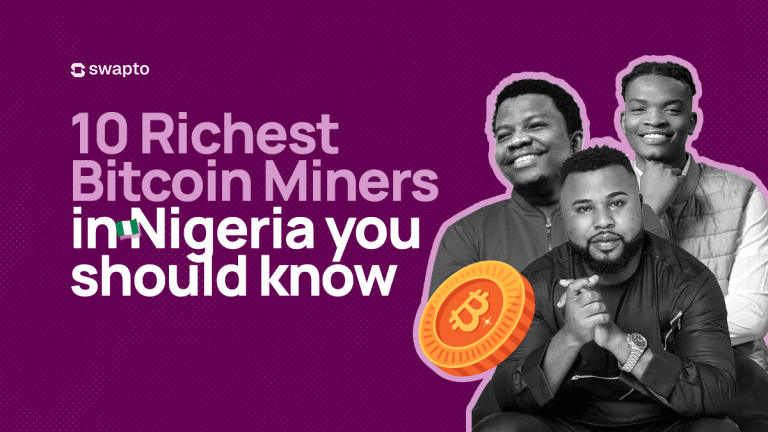
    10 Richest Bitcoin Billionaires in Nigeria

    Bitcoin, the world’s leading cryptocurrency, has become a global financial asset, changing the way individuals and businesses think about money, investments, and wealth creation.

    In Nigeria, Bitcoin adoption has seen exponential growth, particularly among young, tech-savvy entrepreneurs.

    As of 2025, Nigeria is one of Africa’s leading nations in cryptocurrency adoption, and the number of Bitcoin millionaires and billionaires is increasing by the day.

    This blog post explores the stories of the richest Bitcoin billionaires in Nigeria, their journey to success, and how they’re reshaping the country’s financial ecosystem.

    Key Takeaways:

    • Nigeria has become one of Africa’s leading crypto markets with millions of Bitcoin users.
    • Prominent Bitcoin billionaires in Nigeria include Ifeanyi Ezenwaogene, Gaius Chibueze, and Hanu Fejiro Agbodje.
    • These entrepreneurs have significantly impacted the country’s economy, from job creation to financial inclusion.
    • Despite regulatory challenges and security concerns, Nigeria’s Bitcoin billionaires continue to shape the future of the crypto space.

    Why Nigeria is a Crypto Hub in Africa

    Nigeria has emerged as one of the most active markets for Bitcoin and other cryptocurrencies in Africa. According to recent reports, Nigeria has approximately 25 million digital asset users, making it one of the top countries for cryptocurrency adoption.

    The increasing trust in Bitcoin is also reflected in Nigeria’s high stablecoin adoption rate, at 9.3% in 2025.

    Many Nigerians see Bitcoin as a tool for financial inclusion, offering an alternative to traditional banking systems. Moreover, the country’s young population and tech-driven mindset have played a critical role in pushing digital currencies into mainstream use.

    Top 10 Bitcoin Billionaires in Nigeria

    Ifeanyi Ezenwaogene Michael

    1. Ifeanyi Ezenwaogene: Crypto Investor and Educator

    Ifeanyi Ezenwaogene is one of the most notable Bitcoin investors in Nigeria. With an estimated net worth of $12 million, Ezenwaogene has made a fortune by trading Bitcoin and other digital assets.

    His influence extends beyond just investing—he is actively involved in educating new traders and contributing to the crypto community in Nigeria.

    Gaius Chibueze

    2. Gaius Chibueze (Bitcoin Chief): The Crypto Influencer

    Gaius Chibueze, better known as Bitcoin Chief, is a recognized name in Nigeria’s Bitcoin community. With a net worth of around $10 million, Gaius is a crypto influencer and entrepreneur who has played a vital role in educating Nigerians about Bitcoin.

    His platforms and social media channels have been instrumental in spreading knowledge about cryptocurrencies and encouraging people to invest in Bitcoin.

    Hanu Fejiro Agbodje

    3. Hanu Fejiro Agbodje: Co-Founder of Patricia Technologies

    Hanu Fejiro Agbodje is the co-founder of Patricia Technologies, a leading cryptocurrency platform in West Africa. Agbodje’s company has made a significant impact on the adoption of digital currencies in Nigeria.

    With an estimated net worth of $8.9 million, Agbodje’s company has helped bridge the gap between traditional finance and cryptocurrency for many Nigerians.

    4. Onomor Eseoghene: Expert Trader and Analyst

    Onomor Eseoghene is a seasoned cryptocurrency trader and analyst. With a net worth of around $7 million, Onomor is known for his insightful analysis of the Bitcoin market.

    His trading strategies have helped many individuals succeed in the volatile crypto space.

    5. Linus Williams Ifejika (BLord): Entrepreneur and Blockchain Advocate

    Linus Ifejika, also known as BLord, is a digital entrepreneur who has made his fortune in both the real estate and cryptocurrency sectors. As the founder of Blord Group, Linus has used Bitcoin as a primary investment vehicle.

    His net worth is estimated at $7 million, and he has become an influential figure in the Nigerian crypto space, despite facing legal challenges.

    6. Buchi Okoro: Founder of Quidax

    Buchi Okoro is the founder of Quidax, one of Nigeria’s top cryptocurrency exchanges. His platform has become a go-to for Nigerians looking to trade Bitcoin and other digital currencies.

    With an estimated net worth of $4 million, Okoro’s platform continues to grow, providing an easy-to-use interface for crypto enthusiasts across the country.

    7. Tola Joseph Fadugbagbe: Crypto Analyst and Educator

    Tola Joseph Fadugbagbe is a respected crypto analyst and educator with a deep understanding of the cryptocurrency market. His net worth of $4 million reflects his success in trading and his influence as a crypto educator.

    Tola regularly conducts webinars and seminars to teach others how to navigate the world of cryptocurrency trading.

    8. Fidelis Ozuawala (SunnEx): Investor and Influencer

    Fidelis Ozuawala, known as SunnEx, is a crypto trader, investor, and blogger. He is the CEO of Waploaded Media and has amassed a net worth of $3 million.

    His work has made a significant impact on the Nigerian crypto market, and his blog is a go-to source for Bitcoin analysis and investment tips.

    9. Chris Ani: Co-Founder of Cryptocurrency Academy

    Chris Ani is the co-founder of Cryptocurrency Academy, a platform designed to educate Nigerians about Bitcoin and blockchain technology.

    With an estimated net worth of $2 million, Chris has helped thousands of Nigerians understand the potential of digital currencies and how to invest wisely in the volatile market.

    10. Daniel Adekunle Omoshola: Blockchain Pioneer

    Daniel Adekunle Omoshola is the CEO of Blockstale, a company that focuses on blockchain technology solutions.

    His company provides user-friendly software for blockchain applications, helping to drive the adoption of decentralized technology in Nigeria. Daniel’s net worth is estimated at $2.5 million, and he is considered one of Nigeria’s blockchain pioneers.

    The Impact of Bitcoin Billionaires on Nigeria’s Economy

    These Bitcoin billionaires have had a profound effect on Nigeria’s economy. Not only have they created substantial wealth for themselves, but they’ve also contributed to the growth of the digital economy. Their ventures have created jobs, attracted investment, and led to the development of new platforms and technologies.

    Companies like Patricia Technologies have disrupted traditional financial systems by offering decentralized solutions that cater to Nigerians’ financial needs.

    Bitcoin has also played a significant role in increasing financial inclusion. Many Nigerians, especially those in rural areas, have gained access to financial services through cryptocurrencies. This has helped bridge the gap left by the country’s underdeveloped banking sector.

    5 Most Popular Blockchain and Crypto Platforms

    Swapto(Formerly Dtunes) homepage
    1. Swapto(Formerly Dtunes): Swapto(Formerly Dtunes) is a Nigerian blockchain and cryptocurrency platform that has gained popularity for its user-friendly interface and a wide range of services. It offers cryptocurrency trading, wallet services, and educational resources. Swapto(Formerly Dtunes) has earned its place as one of the most popular platforms in Nigeria due to its commitment to local adoption and user satisfaction.
    2. Binance: Binance is a global cryptocurrency exchange that has a significant presence in Nigeria. It offers a wide range of trading pairs and services, making it a preferred choice for Nigerian traders. Binance also provides educational resources and support for the Nigerian crypto community.
    3. Luno: Luno is a cryptocurrency exchange that has been operational in Nigeria for several years. It is known for its user-friendly mobile app, making it accessible to a wide range of users. Luno offers Bitcoin and Ethereum trading, as well as educational materials.
    4. Paxful: Paxful is a peer-to-peer cryptocurrency marketplace that has gained popularity in Nigeria. It allows users to buy and sell Bitcoin using a variety of payment methods, including bank transfers and gift cards. Paxful has a strong presence in the Nigerian market due to its flexibility.
    5. NairaEx: NairaEx is a Nigerian cryptocurrency exchange that focuses primarily on Bitcoin trading. It provides a platform for Nigerians to buy and sell Bitcoin using Nigerian Naira. NairaEx has gained a reputation for its straightforward approach to Bitcoin trading.

    Best App to Sell Bitcoin in Nigeria

    When it comes to selling Bitcoin in Nigeria, having a reliable and user-friendly mobile app can make the process seamless.

    Swapto(Formerly Dtunes) is a reliable app where you can sell your Bitcoin in Nigeria. You can exchange your BTC, USDT, and other cryptocurrencies on this platform for cash. Rates here are unmatched, and you can never get these rates anywhere else.

    If I were you, I would sign up right away.

    Conclusion

    Bitcoin billionaires in Nigeria represent a growing and influential segment of the country’s economy. The rise of Bitcoin and other cryptocurrencies has opened up new opportunities for wealth creation and financial inclusion in Nigeria. As the cryptocurrency ecosystem continues to evolve, it’s crucial for individuals to stay informed, exercise caution, and seek reliable platforms for their crypto investments and transactions.

    Bitcoin’s decentralized nature, limited supply, and global accessibility have made it a game-changer in the world of finance. Nigeria, with its tech-savvy population and increasing interest in cryptocurrencies, is poised to play a significant role in the global crypto landscape.

    The individuals mentioned in this article are just a glimpse of the growing community of Bitcoin enthusiasts and investors in Nigeria. As the crypto space continues to develop, it will be interesting to see how the list of Bitcoin billionaires in Nigeria evolves and how the country’s regulatory framework adapts to this digital revolution

  • How to Send Bitcoin From PayPal to Another Wallet

    How to Send Bitcoin From PayPal to Another Wallet

    Send Bitcoin From PayPal: In the ever-evolving landscape of digital currencies, Bitcoin has emerged as a frontrunner, capturing the attention of investors, enthusiasts, and everyday users alike. As the popularity of Bitcoin continues to soar, the need for secure and efficient methods to manage and transfer this cryptocurrency becomes paramount. One common query that often arises is how to send Bitcoin from PayPal to another wallet. In this comprehensive guide, we will delve into the intricacies of this process, providing step-by-step instructions and shedding light on the essential considerations.

    Understanding the Dynamics of Bitcoin Transactions

    Before we dive into the specifics of sending Bitcoin from PayPal, it’s crucial to grasp the fundamental mechanics of a Bitcoin transaction. Unlike traditional currencies, Bitcoin operates on a decentralized network, utilizing blockchain technology to record and verify transactions. Each transaction is added to a block, forming an unalterable chain. This decentralized nature ensures security and transparency but also means that users must take extra precautions when managing their Bitcoin.

    The Role of PayPal in Bitcoin Transactions

    PayPal, a leading online payment platform, has ventured into the realm of cryptocurrencies, allowing users to buy, sell, and hold various digital assets, including Bitcoin. While this integration has expanded accessibility, it’s important to note that PayPal operates within a centralized system. When users buy Bitcoin on PayPal, they essentially acquire a claim to the cryptocurrency rather than direct ownership. To truly control and transfer Bitcoin, users need to move it to a private wallet.

    Introducing Swapto(Formerly Dtunes) as Your Cryptocurrency Hub

    In the vast and sometimes perplexing world of cryptocurrency, having a reliable platform to facilitate transactions is indispensable. Swapto(Formerly Dtunes) stands out as a versatile platform that not only allows you to trade Bitcoin but also provides a secure environment for managing various cryptocurrencies. With user-friendly interfaces and robust security features, Swapto(Formerly Dtunes) is an ideal solution for those looking to send Bitcoin from PayPal to another wallet.

    Step-by-Step Guide: How to send Bitcoin from Paypal to another wallet

    Step 1: Access Your PayPal Account

    Begin by logging into your PayPal account. Navigate to the cryptocurrency section, where you can view your Bitcoin balance and related transactions. This interface may vary slightly depending on updates and changes made by PayPal, so be sure to familiarize yourself with the latest version.

    Step 2: Select the Bitcoin You Want to Send

    Identify the specific amount of Bitcoin you intend to transfer. PayPal usually provides options to send the entire balance or a customized amount based on your preferences.

    Step 3: Choose the Destination Wallet

    In this step, you’ll need to input the wallet address to which you want to send the Bitcoin. This is a critical stage, as any mistake in the address could result in the loss of your funds. Ensure that the wallet address is accurate and belongs to the intended recipient.

    Step 4: Confirm the Transaction Details

    Review the transaction details thoroughly before confirming. Check the recipient’s wallet address, the amount of Bitcoin being sent, and any associated fees. PayPal may also provide an estimated arrival time for the transaction.

    Step 5: Authenticate the Transaction

    Depending on PayPal’s security protocols, you may be required to authenticate the transaction using methods such as two-factor authentication or biometric verification. This additional layer of security ensures that only authorized users can initiate transactions.

    Step 6: Monitor the Transaction Status

    After confirming the transaction, monitor its progress through the provided transaction ID or tracking information. This step is crucial for ensuring the successful transfer of Bitcoin to the designated wallet.

    Key Considerations When Sending Bitcoin from PayPal

    Transaction Fees:

    PayPal may impose transaction fees when sending Bitcoin. It’s essential to be aware of these fees and factor them into your decision-making process. Additionally, consider the fees associated with the recipient’s wallet, as some wallets may charge for receiving funds.

    Delivery Time:

    The time it takes for Bitcoin to reach the destination wallet can vary. Factors such as network congestion and blockchain confirmations influence the delivery time. Understanding these variables helps manage expectations regarding when the recipient will gain access to the transferred Bitcoin.

    Security Measures:

    Given the irreversible nature of Bitcoin transactions, security should be a top priority. Regularly update your PayPal and wallet passwords, enable two-factor authentication, and use secure internet connections to minimize the risk of unauthorized access.

    Wallet Compatibility:

    Ensure that the destination wallet supports Bitcoin and is compatible with the type of Bitcoin you are sending. Some wallets may have specific requirements or restrictions, so it’s crucial to verify compatibility before initiating the transfer.

    Double-Check Recipient Information:

    A simple but often overlooked step is double-checking the recipient’s wallet address. A single character error could result in the irreversible loss of funds. Always verify the accuracy of the wallet address before confirming the transaction.

    Why Choose Swapto(Formerly Dtunes) for Your Cryptocurrency Transactions?

    Swapto(Formerly Dtunes) emerges as a reliable and user-friendly platform for handling your cryptocurrency transactions. With a focus on security and a seamless interface, Swapto(Formerly Dtunes) provides a comprehensive solution for those looking to trade, transfer, or manage their digital assets. The platform supports various cryptocurrencies beyond Bitcoin, making it a versatile hub for crypto enthusiasts.

    Conclusion

    Sending Bitcoin from PayPal to another wallet is a manageable process, provided users follow the necessary steps and exercise due diligence. Understanding the dynamics of Bitcoin transactions, the role of PayPal in the process, and leveraging platforms like Swapto(Formerly Dtunes) for your cryptocurrency needs contribute to a seamless and secure experience.

    As the cryptocurrency landscape continues to evolve, staying informed about the latest updates, security measures, and user-friendly platforms will empower individuals to navigate the cryptoverse with confidence. With the right knowledge and tools at your disposal, sending Bitcoin from PayPal becomes a straightforward and secure endeavor, unlocking the full potential of your digital assets.

  • 10 Paxful Alternatives to Sell Bitcoin in Nigeria

    10 Paxful Alternatives to Sell Bitcoin in Nigeria

    Paxful Alternatives to Sell Bitcoin: In recent years, the cryptocurrency market has experienced unprecedented growth, and Bitcoin, as the pioneer of cryptocurrencies, has played a pivotal role in this revolution. Nigeria, in particular, has emerged as one of the leading nations in Africa for cryptocurrency adoption, with a burgeoning community of crypto enthusiasts and traders. However, finding reliable platforms to buy and sell Bitcoin can be a daunting task, especially in a market as dynamic as Nigeria’s. One popular platform that has been widely used for trading Bitcoin in Nigeria is Paxful.

    Paxful Alternatives to Sell Bitcoin

    Paxful is a peer-to-peer cryptocurrency exchange that has gained a strong foothold in the Nigerian market due to its user-friendly interface and accessibility. However, it’s essential to explore Paxful alternatives to sell Bitcoin, to ensure that you have a diversified set of options for buying and selling Bitcoin. In this article, we will discuss ten Paxful alternatives to sell Bitcoin in Nigeria, with a particular focus on Swapto(Formerly Dtunes) as the top choice.

    Swapto(Formerly Dtunes)

    Swapto(Formerly Dtunes) homepage

    When it comes to Paxful alternatives in Nigeria, Swapto(Formerly Dtunes) stands out as a reliable and user-friendly platform, making it one of the Paxful alternatives to sell Bitcoin. Swapto(Formerly Dtunes) is a Nigerian-based cryptocurrency exchange that has gained popularity for its seamless trading experience and robust security measures.

    Why Choose Swapto(Formerly Dtunes)?

    1. Nigerian-Focused: Swapto(Formerly Dtunes) is tailored to the needs of the Nigerian market, making it easier for local traders to navigate and use.
    2. User-Friendly: The platform boasts an intuitive user interface, making it accessible for both beginners and experienced traders.
    3. Safety: Swapto(Formerly Dtunes) places a strong emphasis on security, employing encryption protocols and two-factor authentication to protect users’ assets.
    4. Diverse Payment Options: It offers a wide range of payment options, including bank transfers, mobile money, and even gift cards, ensuring you can trade with convenience.
    5. Responsive Customer Support: Swapto(Formerly Dtunes) provides responsive customer support to assist users with any queries or issues they may encounter.
    6. High Liquidity: With a substantial user base, Swapto(Formerly Dtunes) offers high liquidity, ensuring you can quickly buy or sell Bitcoin at competitive prices.

    Binance

    Binance is a globally recognized cryptocurrency exchange that offers a comprehensive platform for trading various cryptocurrencies, including Bitcoin. While it’s not a peer-to-peer platform like Paxful, Binance provides an alternative for Nigerian traders seeking a secure and highly liquid marketplace.

    Why Choose Binance?

    1. Global Reach: Binance is one of the largest cryptocurrency exchanges in the world, providing access to a vast pool of traders and liquidity.
    2. Advanced Trading Tools: For those with experience, Binance offers advanced trading features and charts for technical analysis.
    3. Diverse Cryptocurrencies: In addition to Bitcoin, Binance offers a wide array of cryptocurrencies for trading and investment.
    4. Security: Binance is known for its robust security measures, including cold storage for funds and two-factor authentication.
    5. Staking and Earning: Users can also earn passive income through staking and various earning programs on the platform.

    While Binance may not be a peer-to-peer platform, it provides a reliable option for trading Bitcoin in Nigeria due to its global presence and robust features.

    LocalBitcoins

    LocalBitcoins has been a prominent player in the peer-to-peer cryptocurrency trading space for years. It connects buyers and sellers directly, allowing for a wide range of payment options and a more personalized trading experience and making it one of the Paxful alternatives to sell Bitcoin.

    Why Choose LocalBitcoins?

    1. Peer-to-Peer: LocalBitcoins facilitates direct trading between individuals, giving you more control over the terms of your trade.
    2. Diverse Payment Methods: It supports a plethora of payment options, including bank transfers, cash deposits, and online wallets.
    3. Global Reach: LocalBitcoins is available in numerous countries, making it an excellent option for international traders.
    4. Reputation System: Traders on LocalBitcoins can build reputations based on successful trades, helping you identify trustworthy counterparts.
    5. Escrow Service: LocalBitcoins employs an escrow service to ensure the security of funds during trades.

    LocalBitcoins offers a flexible and versatile platform for buying and selling Bitcoin, making it a popular choice among peer-to-peer enthusiasts in Nigeria.

    Remitano

    Remitano is another peer-to-peer cryptocurrency exchange that has gained traction in Nigeria. It offers a straightforward platform for buying and selling Bitcoin, with an emphasis on security and user convenience.

    Why Choose Remitano?

    1. Secure Escrow Service: Remitano uses an escrow service to secure the funds during trades, ensuring a safe trading environment.
    2. User-Friendly: The platform is designed to be user-friendly, making it suitable for traders of all experience levels.
    3. Diverse Payment Options: Remitano supports various payment methods, including bank transfers and digital wallets.
    4. Quick Verification: The verification process on Remitano is relatively quick and hassle-free.
    5. Responsive Support: Users can access customer support to address any issues or concerns.

    Remitano is a reliable choice for Nigerian traders looking to buy or sell Bitcoin in a secure and user-friendly environment.

    Luno

    Luno is a globally recognized cryptocurrency exchange with a presence in Nigeria. It offers a user-friendly platform for trading Bitcoin and several other cryptocurrencies, making it one of the Paxful alternatives to sell Bitcoin.

    Why Choose Luno?

    1. Regulated Exchange: Luno operates under the regulation of various financial authorities, providing an extra layer of security.
    2. Simple User Interface: The platform is known for its simplicity, making it suitable for beginners.
    3. High Liquidity: Luno offers high liquidity, ensuring you can quickly execute trades at competitive prices.
    4. Mobile App: Luno provides a mobile app for convenient trading on the go.
    5. Educational Resources: The platform offers educational resources to help users understand cryptocurrencies better.

    Luno is a reputable choice for Nigerians seeking a secure and straightforward way to trade Bitcoin.

    Kraken

    Kraken is a well-established cryptocurrency exchange that offers a comprehensive trading platform for a wide range of cryptocurrencies, including Bitcoin. While it’s not a peer-to-peer platform, it provides a secure and highly liquid marketplace.

    Why Choose Kraken?

    1. Security: Kraken is known for its robust security measures, including cold storage and two-factor authentication.
    2. High Liquidity: The exchange offers high liquidity, ensuring you can execute large trades without significant price slippage.
    3. Advanced Trading Features: Kraken provides advanced trading tools and charts for experienced traders.
    4. Regulated Exchange: Kraken is regulated in various jurisdictions, providing a sense of legitimacy.
    5. Staking and Earning: Users can participate in staking and earning programs on the platform.

    While Kraken may not be a peer-to-peer exchange, it offers a reliable and secure option for trading Bitcoin in Nigeria.

    Quidax

    Quidax is a Nigerian-based cryptocurrency exchange that has gained popularity for its focus on the Nigerian market and its user-friendly platform, making it one of the Paxful alternatives to sell Bitcoin.

    Why Choose Quidax?

    1. Nigerian-Focused: Quidax tailors its services to the Nigerian market, making it easier for local users.
    2. Simple User Interface: The platform offers an intuitive and straightforward interface for trading.
    3. Quick Verification: Verification on Quidax is relatively quick, allowing users to start trading sooner.
    4. Diverse Payment Methods: Quidax supports various payment methods, including bank transfers and digital wallets.
    5. Customer Support: Users can access customer support to address any issues or inquiries.

    Quidax is a reliable choice for Nigerians looking for a user-friendly platform to buy and sell Bitcoin.

    NairaEx

    NairaEx is a Nigeria-based cryptocurrency exchange that specializes in facilitating the buying and selling of Bitcoin and other cryptocurrencies with the Nigerian Naira (NGN), making it one of the Paxful alternatives to sell Bitcoin.

    Why Choose NairaEx?

    1. Nigerian-Focused: NairaEx is tailored to the Nigerian market, providing local users with a seamless trading experience.
    2. Secure Transactions: The platform emphasizes security and privacy, ensuring the safety of user funds.
    3. Quick KYC Verification: NairaEx offers a relatively quick KYC verification process for users.
    4. Customer Support: Users can reach out to customer support for assistance.
    5. Competitive Rates: NairaEx strives to offer competitive rates for buying and selling Bitcoin.

    NairaEx is a reputable homegrown option for Nigerian traders looking to exchange Bitcoin for Naira and vice versa.

    CoinCola

    CoinCola is a global peer-to-peer cryptocurrency exchange that connects buyers and sellers directly, offering a variety of payment options for Bitcoin trading, making it one of the Paxful alternatives to sell Bitcoin .

    Why Choose CoinCola?

    1. Peer-to-Peer: CoinCola facilitates direct trades between individuals, providing flexibility in trade terms.
    2. Diverse Payment Options: The platform supports various payment methods, including gift cards and mobile money.
    3. Global Presence: CoinCola is available in multiple countries, offering a wide pool of potential trading partners.
    4. Security: The platform employs escrow services to secure transactions.
    5. User-Friendly: CoinCola provides an easy-to-use interface for traders.

    CoinCola is a suitable choice for those who prefer the peer-to-peer trading experience when buying and selling Bitcoin in Nigeria.

    LocalCryptos

    LocalCryptos is a peer-to-peer cryptocurrency marketplace that connects buyers and sellers worldwide. It offers a secure platform for trading Bitcoin and various other cryptocurrencies.

    Why Choose LocalCryptos?

    1. Peer-to-Peer: LocalCryptos facilitates direct trading between individuals, allowing for customized trade terms.
    2. Global Reach: The platform is accessible to users in numerous countries, providing a diverse trading community.
    3. Secure Escrow Service: LocalCryptos employs an escrow service to secure funds during transactions.
    4. Diverse Payment Methods: Users can choose from a wide array of payment options, including bank transfers and online wallets.
    5. User Privacy: LocalCryptos prioritizes user privacy and security.

    LocalCryptos is an excellent choice for individuals in Nigeria seeking a peer-to-peer marketplace for trading Bitcoin.

    How to Sell Bitcoin in Nigeria on Swapto(Formerly Dtunes)

    Selling Bitcoin in Nigeria involves several steps, and the process can vary depending on the platform or method you choose. Here is a step-by-step guide on how to sell Bitcoin in Nigeria:

    • Log into your account
    • Click on “Trade Crypto” on the homepage
    • Choose “Trade Crypto”
    • Choose the type of crypto you want to sell (BTC in this case) and ‘continue’
    • Enter the amount, and proceed to trade.

    Earn Big on Swapto(Formerly Dtunes) as You Trade

    If you didn’t know you could earn while you trade on Swapto(Formerly Dtunes), well, now you know. You can refer your family and friends to Swapto(Formerly Dtunes) and earn a certain percentage when they trade their Bitcoin.

    Go to Settings and share your referral tag, under “Refer and earn” to start earning today!

    Conclusion

    As the cryptocurrency market continues to evolve, it’s crucial for Nigerian traders to explore various platforms and alternatives to Paxful for buying and selling Bitcoin. Each of the ten alternatives mentioned in this article offers unique features and advantages, catering to the diverse needs of cryptocurrency enthusiasts in Nigeria. Whether you prefer a peer-to-peer experience like Swapto(Formerly Dtunes), a global exchange like Binance, or a secure local platform like NairaEx, there is a suitable option for you to engage in Bitcoin trading with confidence. Remember to conduct your research and choose the platform that aligns best with your trading preferences and requirements. With the right platform, you can navigate the exciting world of cryptocurrency trading in Nigeria effectively and securely.

  • How much is 1 dollar Bitcoin in Naira

    How much is 1 dollar Bitcoin in Naira

    1 dollar Bitcoin in Naira: In the world of digital currencies, Bitcoin stands out as the pioneer and the most widely recognized cryptocurrency. Its decentralized nature and limited supply have garnered immense interest from investors and individuals alike.

    However, the value of Bitcoin fluctuates constantly against traditional fiat currencies, including the Nigerian Naira. In this article, we delve into the question: How much is 1 dollar Bitcoin in Naira? We’ll explore the factors influencing this exchange rate and its implications.

    How much is 1 dollar Bitcoin in Naira?

    1 dollar bitcoin in naira is N1507 as of when this article was written. You can always check the updated rate easily with the Swapto(Formerly Dtunes) bitcoin and trading app, which is available on the Google Play Store and Apple App Store.

    How to Check BTC/NGN Rate

    To check the BTC/NGN rate, you can visit the Swapto(Formerly Dtunes) website or app. They provide real-time rates for various cryptocurrencies, including Bitcoin.

    Here’s how to check the BTC/NGN rate on the Swapto(Formerly Dtunes) app:

    • Log in to your account
    • Click “Use Rate Calculator” on the home page
    • Select your crypto (BTC in this case)
    • Enter amount in USD

    The rate and total are shown, and you can see what you’ll be getting.

    However, it is important to keep in mind that the exchange rate can fluctuate, and the actual value may vary

    Factors Influencing the Value of Bitcoin

    1. Market Demand and Supply: The value of Bitcoin, like any other asset, is influenced by the basic economic principles of demand and supply. When the demand for Bitcoin increases relative to its supply, its price tends to rise, and vice versa. Factors such as investor sentiment, geopolitical events, regulatory developments, and technological advancements can all affect the demand for Bitcoin.
    2. Investor Sentiment: Investor sentiment plays a significant role in the valuation of Bitcoin. Positive sentiment, driven by factors like institutional adoption, positive media coverage, and perceived store of value properties, can lead to increased demand and higher prices. Conversely, negative sentiment, fueled by security breaches, regulatory crackdowns, or market manipulation allegations, can cause a decline in Bitcoin’s value.
    3. Regulatory Environment: Regulatory developments in major cryptocurrency markets, including Nigeria, can impact Bitcoin’s value. Government regulations, tax policies, and legal frameworks can influence investor confidence and adoption rates. Clear and favorable regulations may encourage more widespread use of Bitcoin, while uncertainty or restrictive measures can have the opposite effect.
    4. Technological Advancements: Technological advancements and improvements to the Bitcoin network can also affect its value. Upgrades such as the implementation of the Lightning Network for faster and cheaper transactions, or developments in scalability and privacy solutions, can enhance Bitcoin’s utility and attractiveness to users and investors.

    Implications of Bitcoin’s Value in Naira

    The value of Bitcoin in Naira has several implications for individuals, businesses, and the broader economy:

    1. Investment Opportunities: For investors in Nigeria, the fluctuating value of Bitcoin presents both opportunities and risks. Buying Bitcoin when its price is low and selling when it’s high can result in significant profits. However, the volatility of Bitcoin also means that investors should be prepared for price fluctuations and potential losses.
    2. Remittances and Cross-Border Transactions: Bitcoin offers a decentralized and borderless means of transferring value, making it attractive for remittances and cross-border transactions. Individuals in Nigeria can use Bitcoin to send and receive money from abroad quickly and relatively inexpensively, especially in regions with limited access to traditional banking services.
    3. Economic Stability and Financial Inclusion: In countries like Nigeria, where the traditional financial system faces challenges such as inflation, currency devaluation, and limited access to banking services, Bitcoin can serve as an alternative store of value and financial tool. By providing a decentralized and censorship-resistant means of storing and transferring wealth, Bitcoin can promote economic stability and financial inclusion.

    Conclusion

    The value of 1 dollar of Bitcoin in Naira is influenced by various factors, including market demand and supply, investor sentiment, the regulatory environment, and technological advancements. Understanding these factors is crucial for individuals and businesses looking to navigate the dynamic landscape of Bitcoin and cryptocurrencies. While Bitcoin offers opportunities for investment, remittances, and financial inclusion, it also carries risks due to its volatility and regulatory uncertainties. As the cryptocurrency market continues to evolve, staying informed and exercising caution are essential for anyone considering involvement in Bitcoin transactions.